WHO ARE YOU WEARING?

Award season is almost upon us. It runs from November through to March, and it is mainly the time for those in the entertainment industry to pat themselves on the back and shout to the world, ‘look how great I am’
On the red carpet at the Oscars, interviewers lean in with one burning question, and it’s not ‘what are you up for?’, or ‘do you think you’ll win?’ No, it’s far more materialistic than that. It is “Who are you wearing?” It is not about the achievement, the accolade or the award, It is about the fashion designer. The name behind the garment. The identity it carries.
I put on righteousness, and it clothed me; Job 29:14
righteousness
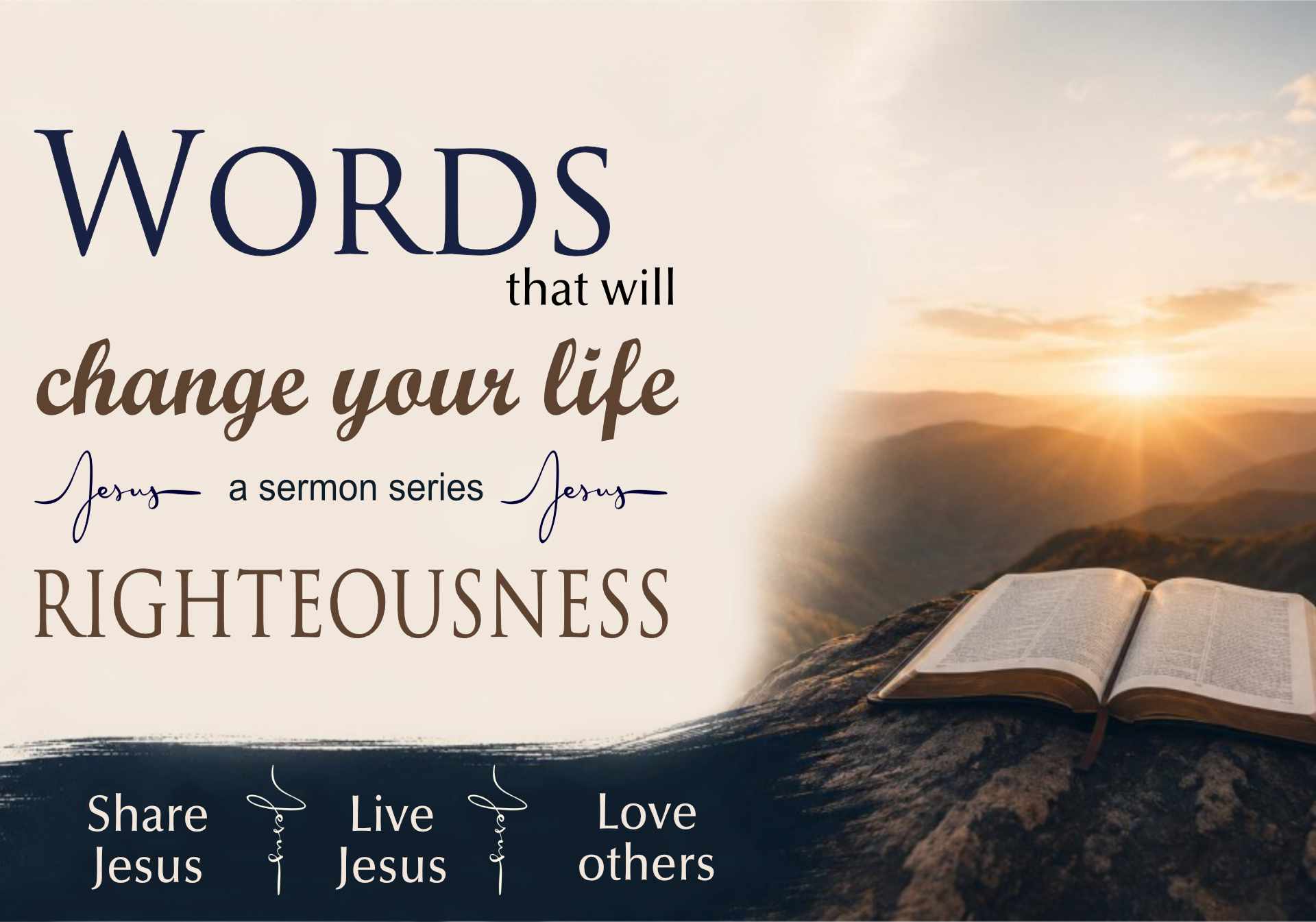
That question is more spiritually loaded than most people realize. Because there is a word — an ancient, layered, profoundly misunderstood word — that answers it for every person who has ever wrestled with guilt, shame, or the exhausting feeling that they are never quite good enough. That word is righteousness. And if you let it, it will change your life.
more than religion
Most people hear the word righteousness and immediately picture someone with their nose in the air, a Bible tucked under one arm, judging everyone around them. That is not what this word means. Not even close. To understand it properly, you have to travel back through centuries of language, culture, and history.
In the time of the prophet Isaiah, the Hebrew word for righteousness — tsedeq — carried a rich, multi-layered meaning. Spiritually, it referred to divine deliverance, the kind God demonstrated when He brought Israel out of Egypt. It meant being made right by God. Not just having sins removed, but being made good enough to stand in the very throne room of God. Ethically, it meant treating others with justice — being honest and transparent in business, doing right by the people around you. Morally, it meant integrity in your closest relationships: your spouse, your family, your friends.
By the time of the apostle Paul, writing into a Greco-Roman world, the word had taken on additional colour. In that culture, righteousness meant legal justice — trusting that a judge would act with fairness. It meant keeping your promises without wavering, letting your yes be yes and your no be no. It meant civic duty, acting with integrity within your community and taking practical action for others. It was not a religious insider term. It was the language of everyday life.
Jesus himself pushed back hard against the hypocrisy of the religious leaders of those days, who had reduced righteousness to personal religious performance — strict adherence to the law and traditions that neglected mercy and justice for the vulnerable. Real righteousness, He made clear, was never meant to be a trophy. It was meant to be a way of living.

back to the beginning.
To truly understand righteousness, you have to go all the way back — further than Isaiah, further than Moses — to the Garden of Eden.
Before the fall, Adam and Eve were righteous. They were in perfect union with God, in right relationship with Him, and that relationship was full of purpose. Their work was not about fixing broken things. It was about cultivating, developing, and caring for creation. They had dominion, but they were meant to exercise it by reflecting God’s own image — with care, with integrity, with love.
We are not called to fix the world, we are called to reflect God’s righteousness – His grace, mercy and love, to a hurting world.
Righteousness, at its origin, meant being in the right place, doing the right job, with the right heart.
Then came the fall. That right place was lost. That right relationship was severed. That right heart was corrupted. And since that moment, all of human history has been the story of God working to bring mankind back into a right relationship with Him – righteous before Him.
Isaiah 64:6 describes the human condition plainly — everything we try to offer God in our own strength is like filthy rags. Paul echoes it in Romans 3:10 where he says that no one is righteous and Romans 3:23, making it clear that every person falls short of God’s standard. Romans 6:23 states the consequence honestly: the wages of sin is death. There is no self-improvement program, no amount of striving or achieving, that bridges the gap between a righteous God and unrighteous humanity.
But we are all like an unclean thing, And all our righteousnesses are like filthy rags; - Isaiah 64:6
The great exchange.
Have you ever experienced imposter syndrome? It is that chronic, nagging feeling that despite everything you have accomplished, you are a fraud waiting to be found out. You try and try to be the best you can be, and eventually you are simply worn out.
That is what life looks like when we try to manufacture our own righteousness. Adam and Eve felt it immediately after the fall — ashamed, naked, afraid, with nothing they could do to change their standing before God.
But then God does something extraordinary. He steps in with what can only be called the great exchange.
The picture of it appears in vivid detail in Zechariah 3:1-5. Joshua the high priest stands before God in filthy garments, with Satan at his side accusing him. And God does not argue the point. He simply says: take away the filthy garments. Remove his iniquity. Clothe him with rich robes. Put a clean turban on his head.
Notice what changed in Joshua in that moment. Not his personality. Not his past. Not his temptations or his humanity. What changed was his standing before God. His relationship with God. He got to stand before the Almighty not bearing sin, and guilt, and shame, but clean — washed white as snow.
Isaiah 61:10 celebrates exactly this: being clothed with the garments of salvation, covered with the robe of righteousness.
And that robe is not a coat you pull on in the morning and hang up at night. It is not something you can take off again. Romans 13:14 calls it putting on the Lord Jesus Christ. Galatians 3:27 says that if we have been baptized then we have ‘put on’ Christ. The robe of righteousness is not a religious achievement. It is a person. It is Jesus.
I will greatly rejoice in the Lord, My soul shall be joyful in my God; For He has clothed me with the garments of salvation, He has covered me with the robe of righteousness, - Isaiah 61:10
The righteousness of God
Here is where everything shifts. In 2 Corinthians 5:21, Paul writes that God made Christ — who knew no sin — to be sin for us, so that we might become the righteousness of God in Him.
Not that we might act more righteously. Not that we might feel more righteous on our better days. That we might become the righteousness of God at all times.
That changes everything. When illness comes — you are the righteousness of God. When you get it wrong — you are the righteousness of God. When frustration rises and anger takes over — you are still the righteousness of God in Christ Jesus. In your weakness, in your frailty, in your most broken moments, your standing before God does not change.
So the next time someone asks who you are wearing — you know the answer.